
Property Deal Sourcing UK: What Sourcers Actually Need to Deliver (and How to Stand Out Without Cutting Corners)
Property deal sourcing UK is no longer about forwarding a portal link and calling it “below market value”. The sourcers who actually stand out are the ones who can analyse a deal, evidence their assumptions, and deliver a credible investor pack that lets an investor say “yes” (or “no”) quickly — without corners being cut.
That’s the “answer” to what works in modern sourcing: do the work investors wish every sourcer did. This article breaks down what that means in practice, why most sourcers fail, and how to produce investor packs that are consistent, compliant, and numbers-led.
We’ll cover:
- What UK deal sourcing really involves (and why most sourcers fail)
- The difference between finding a property and analysing it properly
- Core responsibilities: comps, rents, refurb scope, financing logic, returns
- How to build trustworthy investor packs without crawling portals
- How DealSheet AI speeds up deal analysis while keeping sourcers consistent and UK-focused
- How to present deals with clear numbers rather than hype
Why “deal sourcing” has exploded (and why the bar is rising)
There are more people calling themselves sourcers than ever. That’s partly because:
- Investors have less time (and more competition) to find deals themselves
- Knowledge is more widely shared (pods, courses, communities)
- Technology makes marketing and lead capture easier than ever
- Spreadsheets and basic calculators are widespread — but they still don’t solve underwriting
The net result is the same in most markets: supply of deals is limited, supply of sourcers is not. When markets get crowded, the only sustainable differentiator is trust — and trust comes from methodical, transparent due diligence, not louder claims.
If you’re searching how to be a deal sourcer, the core answer is simple: you’re not paid to “find a property”. You’re paid to reduce uncertainty for the investor.
What UK deal sourcing really involves (and why most sourcers fail)
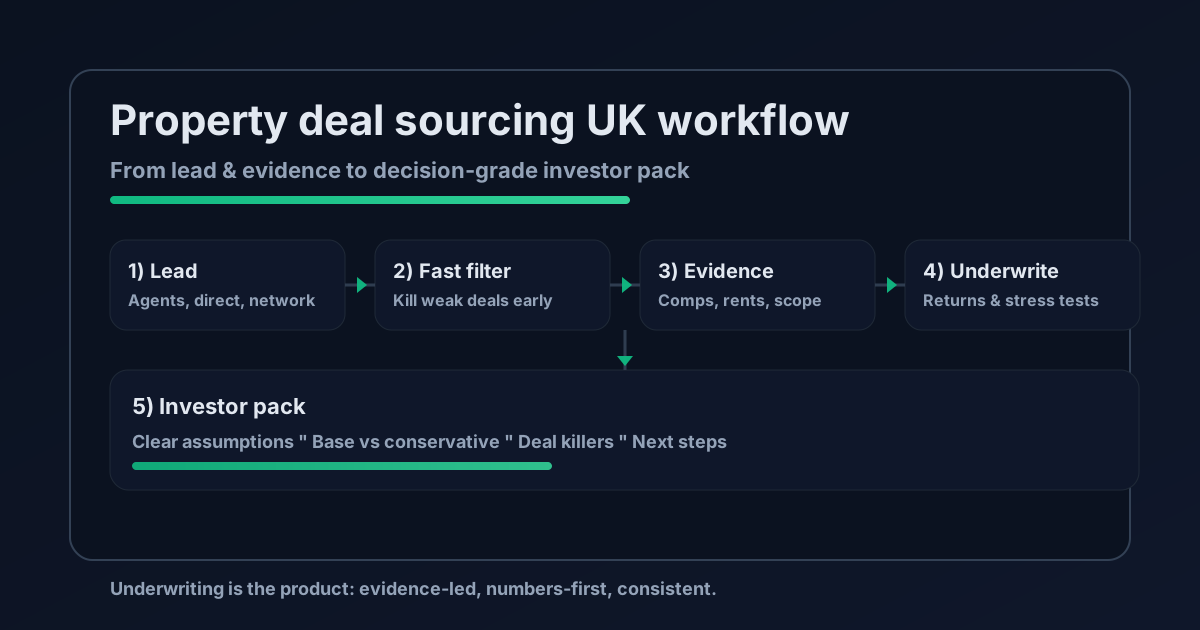
At a high level, deal sourcing is the process of:
- Finding an opportunity
- Filtering quickly
- Underwriting properly
- Packaging the deal for an investor
- Supporting the transaction (handover, introductions, evidence)
Most sourcers fail because they get stuck at step 1.
The most common failure modes
- Confusing “discount” with “deal”: below asking price is not the same as below market value; a tired property in a weak area is often “cheap for a reason”.
- Overstating rents: using aspirational rents rather than evidence-based comparables.
- Ignoring capex: assuming a cosmetic refurb when the property needs compliance work, damp remediation, electrics, roof repairs, or layout changes.
- Underestimating friction: voids, management, maintenance, letting fees, licensing, service charges, and the day-to-day operational reality.
- Not understanding finance constraints: lender appetite varies wildly by property type, title, construction, EPC, lease terms, and strategy (HMO/SA/BRRRR).
- Selling with hype: presenting one “best case” number instead of ranges, stress tests, and clear assumptions.
If you want to deliver serious value, you must treat deal sourcing like professional underwriting — not a marketing funnel.
Where good sourcers actually create value
It’s worth saying this explicitly: the investor is not paying you for a link. They are paying for speed and judgement.
Good sourcers create value by:
- Filtering noise: an investor might look at 200 listings to find one worth viewing; you help remove the 199.
- Packaging certainty: you turn “maybe” into “here’s the range and the risk”.
- Saving time: by providing evidence and assumptions upfront, the investor doesn’t have to rebuild the same spreadsheet for every opportunity.
- Reducing errors: investors make expensive mistakes when they rush or when a spreadsheet has a hidden assumption; your process should prevent that.
If you treat underwriting as the product, you’ll attract repeat buyers. If you treat hype as the product, you’ll constantly need new leads.
Finding a property vs underwriting a property (the difference investors pay for)
Finding properties is search. Underwriting is judgement.
Underwriting answers the investor’s real questions:
- Is the “market value” claim defensible?
- Is the rent forecast realistic for this exact street and spec?
- What does the refurb actually involve, and what is the cost range?
- What is the finance route (and what could break it)?
- What are the returns after costs and tax, not just on a headline yield?
- What are the key risks and deal killers?
If your investor pack doesn’t answer those, it isn’t a pack — it’s a brochure.
Deal analysis UK: the numbers investors actually care about
Different investors focus on different targets, but most serious buyers will want to see some version of:
- Cash required: deposit, stamp duty, legal, broker fees, refurb budget, contingency
- Monthly cashflow: not just “yield” — the money that hits the bank after costs
- Cash-on-cash return (ROI): the return on invested cash, not on property price
- Stress performance: what happens if rates rise, rents soften, or voids increase
- Exit options: refinance viability (if relevant) and resale reality
This is why “headline yield” is a weak selling point. A deal can show a decent gross yield and still be a poor investment once management, maintenance, voids, compliance work, and finance constraints are included.
When you present numbers, make it easy for the investor to re-run them mentally:
- show a small assumptions table
- show base and conservative outcomes
- show the single assumption that matters most (often rent, capex, or rate)
The core responsibilities of a deal sourcer (what you must deliver)
Whether you’re sourcing vanilla buy-to-lets, HMOs, serviced accommodation, or BRRRR deals, the responsibilities below show up repeatedly.
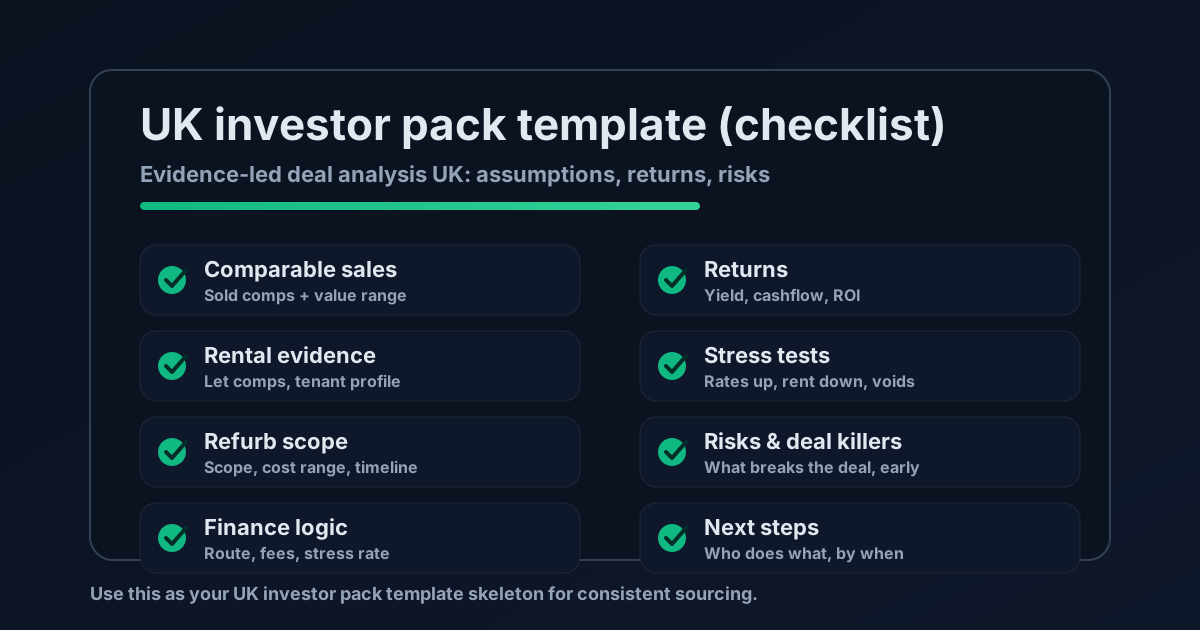
1) Comparable sales (comps): evidence the price and the exit
Comps are not “what’s listed”. They are what actually sold.
At minimum, investors need:
- 3–6 sold comparables within a relevant radius
- Similar beds/baths and property type
- Similar condition (or clear adjustments explained)
- A note on date sold (a 24-month-old comp can be misleading in moving markets)
Good sourcers also include:
- A “best”, “base”, and “conservative” market value range
- Why the subject property is different (corner plot, parking, school catchment, road noise, lease length)
If you’re presenting a BRRRR or refurb project, the exit valuation is everything. You can’t just assume “it’ll be worth £X after works” — you need comps that resemble the post-works finish and layout.
2) Rental comps: prove the rent, don’t predict it
Rent evidence should include:
- Recent lets (not only current listings)
- A note on furnishing status
- Size/spec/context (parking, garden, EPC, transport links)
Be explicit about assumptions:
- Will the investor self-manage or use an agent?
- Are bills included (HMO/SA) or not?
- Is the rent supported by local demand for that tenant type?
If you overstate rent to make a spreadsheet work, you are selling a fantasy — and investors will figure it out quickly.
3) Refurb scope: define the work, don’t wave at it
Investors don’t need a perfect schedule of works, but they do need:
- A clear scope list (what is included and excluded)
- A cost range with contingencies
- A timeline estimate (and what could delay it)
Avoid the “£5k light refurb” trap. If your scope is not specific, the budget is not real.
For older stock, explicitly consider:
- electrics (EICR outcomes and likely remedials)
- damp and ventilation
- roof and gutters
- windows and insulation / EPC constraints
- heating system age and controls
- fire safety requirements for HMOs
4) Finance logic: show what’s financeable and what isn’t
This is where many packs fall apart.
A credible investor pack should include:
- Strategy fit (BTL vs HMO vs SA vs BRRRR)
- Indicative deposit and fees
- Realistic interest rate assumption (plus a stress rate)
- Lender constraints that could block the deal (construction, lease terms, commercial element, title issues)
For BRRRR, include staged finance thinking:
- purchase funding route (cash/bridge)
- holding costs during works
- refinance assumptions (valuation, LTV, fees)
- rental stress test / affordability
5) Returns: present them clearly (and include after-tax thinking)
Returns should not be one number.
At minimum, show:
- gross yield and net yield
- monthly cashflow
- cash-on-cash / ROI on invested cash
- a stress test (rates up, rent down, voids up)
If you want to build trust fast, show:
- base case + conservative case
- the assumptions table (so the investor can change one input and see the impact)
For many UK investors, after-tax performance is what matters. If your pack ignores Section 24 and the investor is a higher-rate taxpayer, you are not giving them decision-grade numbers.
This is where tools matter. A spreadsheet can do it, but only if your tax logic, costs, and finance assumptions are consistent (and most aren’t).
Due diligence deal killers (use this to protect your reputation)
Here’s the uncomfortable truth: investors remember the sourcer who saved them from a bad deal more than they remember the sourcer who sold them a “great one”.
You stand out by calling out deal killers early.
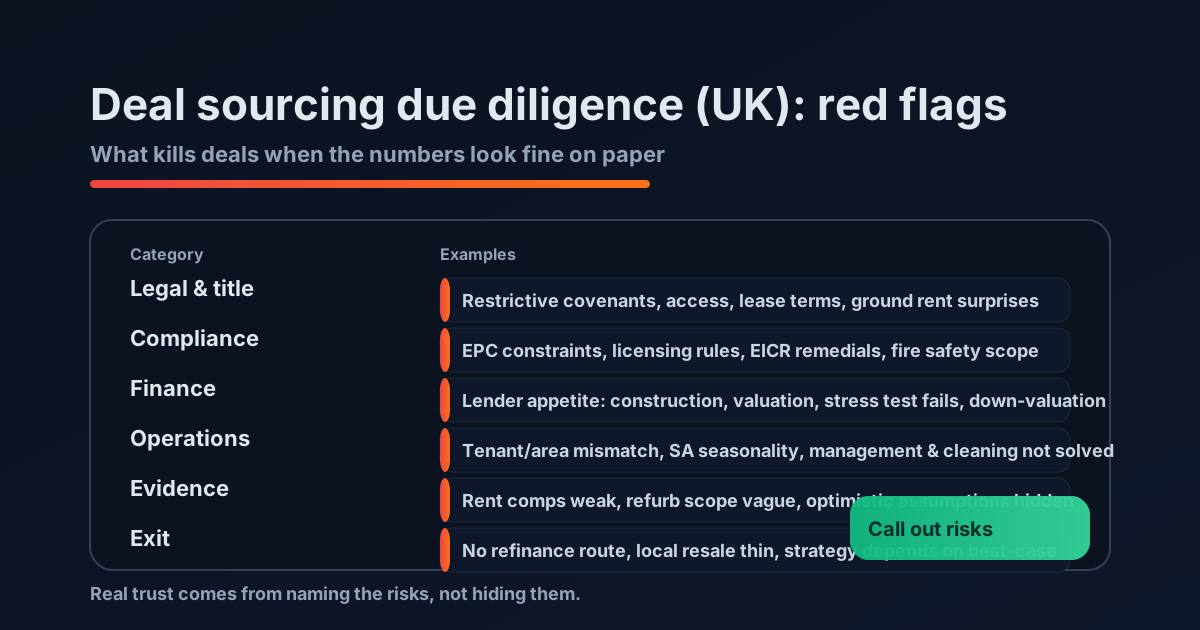
A practical way to present this in a pack is a single “Risk and Mitigation” page with:
- Risk: what could go wrong
- Likelihood: low/medium/high
- Impact: low/medium/high
- Mitigation: what you would do (or what the investor should verify)
This is not negativity. It is professionalism.
“UK investor pack template”: a structure that actually gets deals funded
If you’re building a UK investor pack template, use a structure that mirrors how investors decide. Here’s a practical outline.
Executive summary (one page)
- Deal type (BTL/HMO/SA/BRRRR)
- Location and tenant/guest profile
- Purchase price and claimed market value (with range)
- Investment summary: cash required, cashflow range, key risks
- Clear “who this deal is for” statement
Property details and evidence
- Address area (not always full address until NDA/fee agreement, depending on your process)
- Photos/video walkthrough
- Comparable sold prices (evidence)
- Comparable rents (evidence)
Assumptions
- rent/nightly rate assumptions (and basis)
- voids/occupancy assumptions
- management assumptions
- maintenance/reserves
- utilities/bills (as relevant)
- finance assumptions (rate, product fees, stress)
Financial model outputs
- purchase costs (including SDLT and fees)
- operating costs (and what’s included/excluded)
- monthly cashflow (base vs conservative)
- ROI / cash-on-cash
- sensitivity table (rates, rent, voids)
- optional: refurbishment budget and uplift (BRRRR/refurb)
Due diligence and risks
- legal/title considerations (lease, restrictions, access)
- compliance (EPC, gas, EICR, licensing)
- operational risks (tenant demand, seasonality, HMO management complexity)
- exit risks (refinance constraints, resale market)
Next steps
- what the investor needs to do next (viewing, finance AIP, solicitor, survey)
- what you’ll support (introductions, documents, handover)
An investor pack that follows this structure is not “overkill”. It is the minimum for trust in a crowded sourcing market.
How to build investor packs without crawling portals all day
Most sourcers waste time doing low-value work:
- copying listings into a Word doc
- pasting screenshots into a PDF
- manually keying numbers into a spreadsheet
- chasing inconsistent data sources
Instead, build a repeatable pipeline:
- Lead capture (agents, direct-to-vendor, networking, repeat buyers)
- Fast filter (kill deals early using minimum criteria)
- Evidence pack (comps, rent comps, scope notes, photos)
- Analyse once (single source of truth for inputs)
- Generate outputs (pack sections, charts, scenarios)
The goal is not to “do more deals”. The goal is to do fewer, better deals — and to present them properly.
Data sources that beat “scrolling portals” (without pretending you can predict the market)
You do not need to crawl portals for hours to produce credible evidence. You do need to:
- keep a consistent method
- record your sources
- avoid overconfidence
Useful UK sources and habits include:
- Land Registry sold prices (where available) to anchor valuation claims
- EPC register to check ratings, heating type, and potential constraints on letting
- Local letting agents for realistic rent and tenant demand (get it in writing if possible)
- Your own database of previous deals: what sold, what let, and what refurb costs looked like in reality
- Street-level checks: parking, road noise, nearby commercial uses, and general demand signals
The goal is not to produce a perfect forecast. It is to produce a defensible range and show your working.
Compliance: standing out without cutting corners
Property sourcing is not a free-for-all. Investors increasingly ask sourcers about professionalism and compliance because they’ve been burnt.
While this isn’t legal advice, common expectations in the UK include:
- Appropriate business registration and contracts
- Data protection awareness (ICO registration where applicable)
- Anti-money laundering processes and record keeping (where applicable)
- Membership of a redress scheme (commonly expected for property agents/introducers in many contexts)
- Clear fees, disclosures, and conflicts-of-interest policy
Cutting corners on compliance doesn’t just create risk — it destroys your reputation.
How DealSheet AI helps sourcers analyse deals faster (without losing rigour)
The best sourcers don’t want “AI that writes hype”. They want tooling that:
- keeps inputs consistent across deals
- applies UK-specific modelling correctly
- produces clear outputs and scenarios quickly
- reduces data-entry time and spreadsheet mistakes
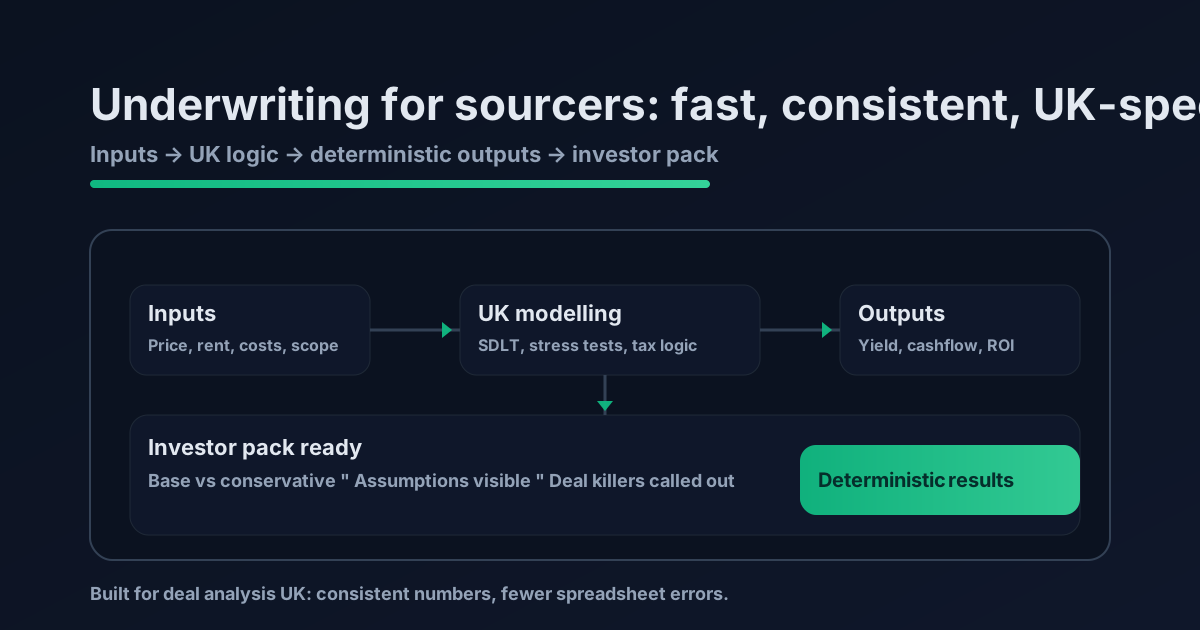
DealSheet AI is designed around deterministic modelling: same inputs produce the same outputs, with UK-focused assumptions and calculations that stay consistent between deals. That matters for sourcers because investors compare opportunities — and inconsistency kills trust.
Practical examples of where this helps:
- Faster conversion of notes/screenshots into structured inputs (less re-typing)
- Clear yields, cashflow, ROI, and stress tests without rebuilding spreadsheets every time
- UK-specific logic (like stamp duty and common cost structures) applied consistently
- The ability to present deals with “base vs conservative” numbers, not one optimistic figure
Used properly, tooling doesn’t replace due diligence — it makes due diligence scalable.
How to stand out as a sourcer without racing to the bottom on fees
In a competitive market, some sourcers try to win by being cheaper. That’s a short game. The long game is being trusted.
Here are “boring” things that make you stand out instantly:
- Make your assumptions explicit (investors hate hidden spreadsheets)
- Show evidence before persuasion (comps first, claims second)
- Be conservative with what breaks deals (capex, voids, rates, down-valuations)
- Offer a clear process (what happens after fee agreement, what documents you provide, what you don’t do)
- Use a consistent format (investors love being able to compare deals quickly)
If an investor can look at your pack and understand the deal in five minutes, you will get repeat business.
How to present deals with clear numbers rather than hype
Here’s the simplest way to upgrade your packs immediately:
Replace “this is a great deal” with “this is the range”
Investors don’t need certainty. They need clarity.
Show:
- Base case (reasonable assumptions)
- Conservative case (slower rents, higher voids, higher costs)
- The one risk that would kill the deal (and your mitigation)
Use plain language and put assumptions on the page
If an investor can’t see your assumptions, they’ll assume the worst.
Include:
- Where the rent figure comes from
- What you’ve assumed for voids and maintenance (and why)
- What happens at a +2% rate stress test
Call out deal killers early
Don’t bury risks in appendix pages. Put them up front:
- “This deal requires HMO licensing; confirm Article 4 position and minimum room sizes.”
- “This refurb assumes no roof works; budget range increases if survey flags issues.”
- “This refinance assumes a £X valuation; conservative valuation reduces cash extraction.”
Transparency closes deals faster than hype.
A one-page “UK investor pack template” summary you can copy
If you want something you can literally paste into your investor pack, use this as a front-page summary:
- Deal overview: strategy, location, property type, target buyer profile
- Purchase: price, market value range, sourcing fee and terms
- Evidence: sold comps (list), rental comps (list), notes on adjustments
- Costs: SDLT, legal/broker, refurb range with contingency, operating cost assumptions
- Finance: deposit, rate assumption, product fees, stress test rate
- Returns (base vs conservative):
- Net yield
- Monthly cashflow
- Cash-on-cash return (ROI)
- Risks & mitigations: top 3 deal killers and what to verify
- Next steps: viewing, finance, solicitor, survey, timelines
This is how you move from “marketing” to “decision support”.
The future of property deal sourcing UK: underwriting is the product
As deal sourcing becomes more crowded, the “product” is shifting:
- from “access” to deals
- to “decision-grade underwriting”
If you want to win high-value investors, build a process that:
- is repeatable
- is evidence-led
- is conservative where it matters
- is fast enough to compete
- is compliant and professional
That’s how to be a deal sourcer investors keep coming back to.
And if you take one thing away, it’s this: property deal sourcing UK is not about finding properties. It’s about delivering investor-ready decisions — with clear numbers, credible evidence, and no corner-cutting.