
Your Guide to Using a Stamp Duty Land Tax Calculator
Your Guide to Using a Stamp Duty Land Tax Calculator
Figuring out Stamp Duty Land Tax (SDLT) is a critical step in any property purchase, as it directly impacts your upfront costs. A reliable stamp duty land tax calculator is the quickest way to estimate the tax you'll owe, applying the correct rates and surcharges to your property's price based on your specific circumstances. This guide will walk you through exactly how it's calculated. For property investors who need these numbers integrated into a full deal analysis, the DealSheet AI app handles all SDLT calculations automatically. Download the DealSheet AI app from the App Store to streamline your financial modelling.
What is Stamp Duty Land Tax Anyway?
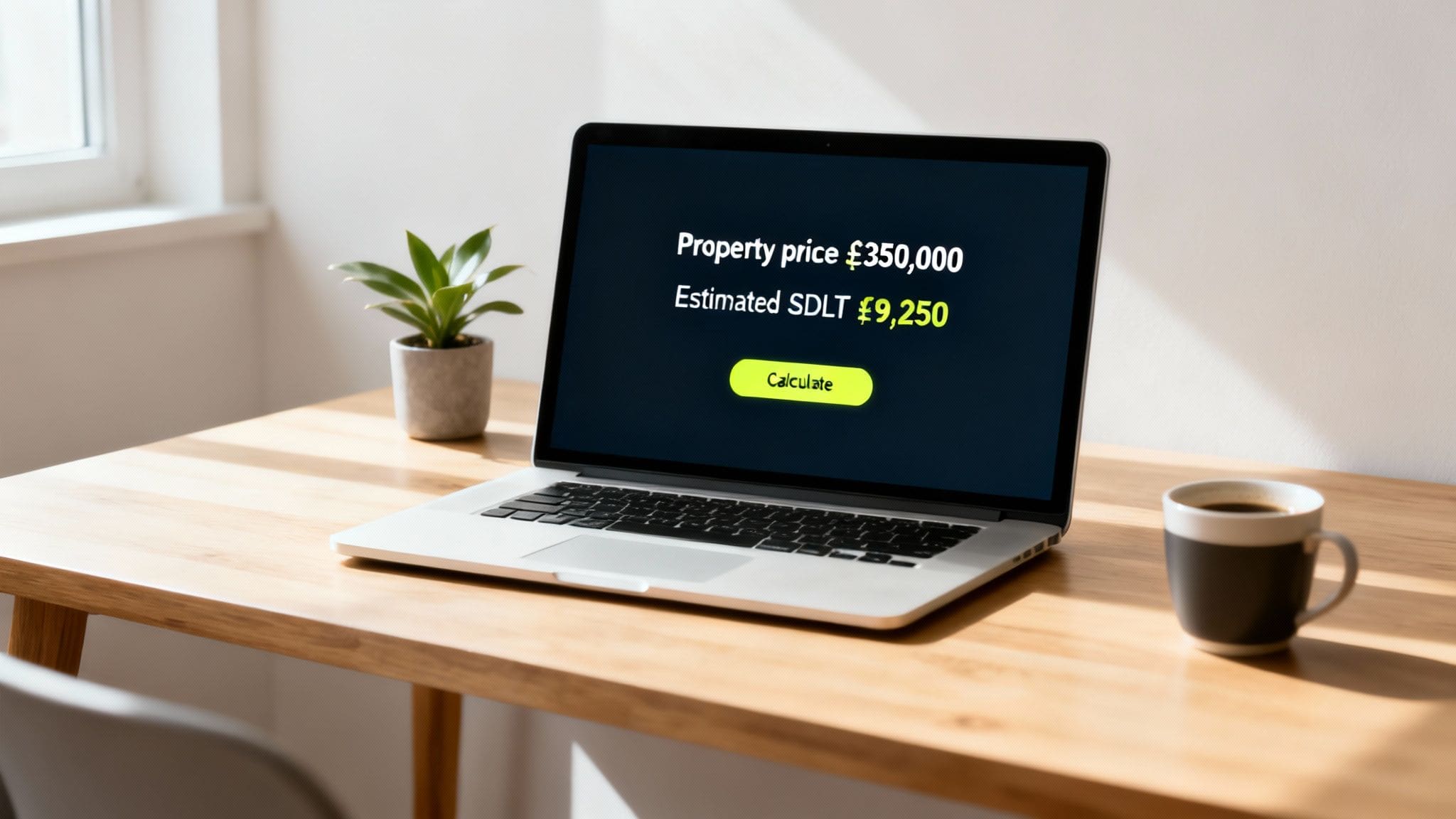
Stamp Duty Land Tax, or SDLT for short, is the tax you pay when buying property or land over a certain price threshold in England and Northern Ireland. Think of it less like a flat fee and more like income tax – it works on a progressive, banded system.
This means you only pay the specified rate on the portion of the property price that falls within each band. Getting your head around this is fundamental to forecasting one of your biggest upfront costs when buying a property.
How the SDLT Bands Work
The final SDLT figure depends on a few things: the purchase price, your status as a buyer (are you a first-time buyer or a home mover?), and what you plan to do with the property. As the property's value goes up, it climbs through different tax brackets, with higher rates kicking in only on the value within those specific brackets.
This tiered approach avoids the harsh "cliff edges" of older tax systems, where being just £1 over a threshold could cost you thousands more in tax.
To give you a clear picture, here's a quick rundown of the standard residential rates for your main home.
Quick Guide to Standard SDLT Rate Bands (England & NI)
This table shows the current standard SDLT rate bands for a primary residence purchase in England and Northern Ireland.
| Property Value Bracket | Standard SDLT Rate |
|---|---|
| Up to £250,000 | 0% |
| £250,001 to £925,000 | 5% |
| £925,001 to £1.5 million | 10% |
| Over £1.5 million | 12% |
These bands ensure that the tax bill smoothly increases with the property price, making the system a bit fairer.
The Real Kicker: Surcharges
It's crucial to realise that your personal circumstances can massively change the final bill. For instance, if you're buying an additional property, like a buy-to-let or a second home, you'll get hit with a 3% surcharge on top of the standard rates for every band. This can easily double the tax bill on some properties.
Because SDLT is progressive and your buyer profile changes the effective rates, the same property can produce wildly different tax bills.
Let's take an example. A standard home mover buying a house for £500,000 would pay £12,500 in SDLT. But an investor buying that same property as a second home would face an extra £15,000 surcharge, pushing their total tax bill to a hefty £27,500.
You can dig into more of these variables over at propertydata.co.uk. This is precisely why a reliable stamp duty land tax calculator is essential – it gives you an accurate figure tailored to your specific situation, not just a generic estimate.
Understanding How Stamp Duty Actually Works
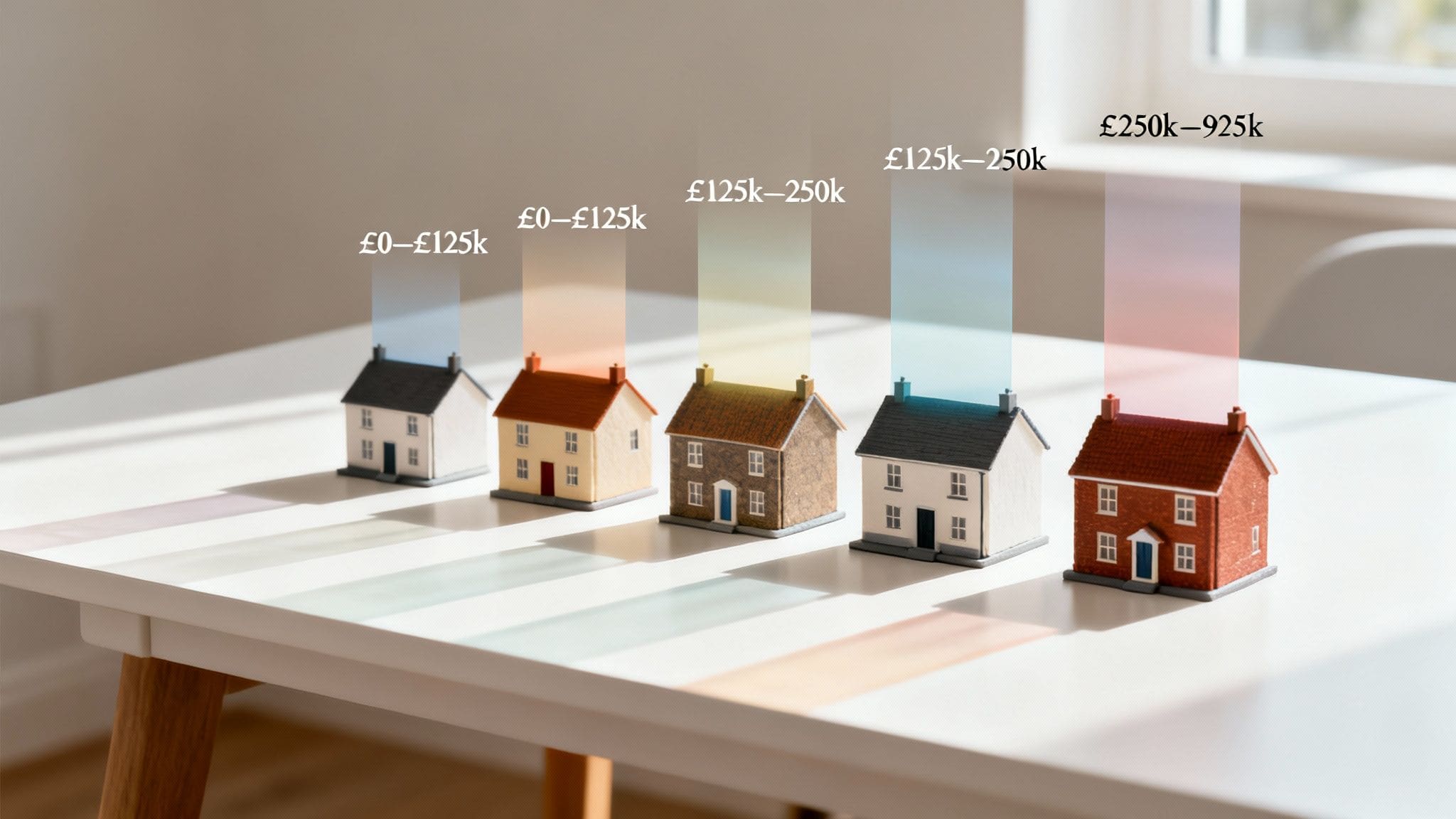
To make any sense of the numbers a stamp duty land tax calculator spits out, you first need to grasp the logic behind the tax itself. It's a common mistake to think of Stamp Duty Land Tax (SDLT) as a simple sales tax applied to the entire purchase price.
A much better way to think about it is to compare it to the UK income tax system.
Just like your income is sliced into different bands, with each slice taxed at a progressively higher rate, so is the value of a property. You only pay the specified tax rate on the portion of the property's value that falls within each band. This creates a much fairer, more gradual increase in the tax bill as prices go up.
This structure is a deliberate move away from a much harsher system we used to have. In fact, knowing a little bit about the history of SDLT explains a lot about the system we have today. Before December 2014, the UK used a brutal "slab" system where the entire purchase price was taxed at a single, higher rate the second a threshold was crossed. You can learn more about the historical changes to SDLT and what they mean, but the key takeaway is that the modern system is designed to be much smoother.
The Old Slab System: A Quick Comparison
Imagine two buyers trying to complete a deal under the old rules.
- Buyer A buys a house for £250,000. The tax rate at the time was 1%, making their bill a straightforward £2,500.
- Buyer B agrees a price of £250,001. That single extra pound pushes them into the next tax band, where the rate was 3% on the entire amount. Their bill rockets to an eye-watering £7,500.
This tiny £1 difference in price resulted in an extra £5,000 in tax. It was a punitive system that distorted the market, creating strange pricing dead zones just below the thresholds.
The Modern Progressive System Explained
The current system, which any modern stamp duty land tax calculator uses, fixes this problem completely. Let's look at that same £250,001 purchase today using the standard rates for someone moving home:
- The first £250,000 is taxed at 0%. The total tax on this portion is £0.
- The remaining £1 is taxed at the next band's rate of 5%. The total tax on this tiny slice is just £0.05.
The total SDLT bill is a mere five pence. This progressive method ensures the tax you pay is directly proportional to the price, offering a far more logical and equitable approach for homebuyers across England and Northern Ireland. It's the foundational 'why' behind the numbers your calculator generates.
Who Pays More? The Key SDLT Surcharges
Not all property purchases get taxed the same way. The standard SDLT rates are really just the starting point; a couple of key circumstances can trigger surcharges that will dramatically inflate your final tax bill. Forgetting them can wreck your deal numbers.
Understanding these extra charges is absolutely vital for budgeting correctly, especially if you're a property investor. Two surcharges have the biggest impact: one for buying additional properties and another for non-UK residents.
The 3% Higher Rate for Additional Dwellings
This is the big one. The most common surcharge you'll run into is the 3% Higher Rate for Additional Dwellings (HRAD). It's an extra layer of tax applied on top of the standard residential rates across all bands if the property you're buying means you'll own more than one home.
This rule nearly always catches:
- Buy-to-let investors purchasing rental properties.
- Anyone buying a second home or a holiday let.
- Parents helping their children buy a property, but their name is on the title deeds.
On a £300,000 property, this surcharge alone adds a hefty £9,000 to your SDLT bill. It's a serious capital expense that you have to factor into your investment appraisal from day one.
Now, there's an important exception. If you're genuinely moving house—replacing your main residence—you generally won't pay the higher rate. But what if there's an overlap, where you buy your new home before you've managed to sell your old one? In that scenario, you have to pay the 3% surcharge upfront. The good news is you can claim a full refund from HMRC as long as you sell your previous main residence within 36 months.
The 2% Non-Resident Surcharge
The second major surcharge is aimed squarely at buyers who aren't UK residents. Rolled out on 1 April 2021, the 2% non-resident surcharge (NRSD) applies to purchases of residential property in England and Northern Ireland by anyone—an individual or a company—who isn't considered a UK resident for tax purposes.
This 2% gets added to the standard SDLT rates. But here's the crucial part: it also stacks right on top of the 3% HRAD if the buyer is also purchasing an additional property.
Think about what that means. An overseas investor buying a second home in the UK could be facing a combined surcharge of 5% (that's the 3% HRAD + 2% NRSD) before the standard marginal rates even kick in. That makes a massive difference to the total tax you'll pay.
Getting a grip on whether you're liable for one or both of these surcharges is the first step to getting a reliable figure from any stamp duty land tax calculator. Misinterpreting these rules is one of the most common—and expensive—mistakes an investor can make.
How You Can Legally Reduce Your SDLT Bill
While Stamp Duty is a reality for most buyers, your final bill isn't set in stone. The key to legally shrinking that bill—sometimes by thousands of pounds—is to understand the reliefs and exemptions on offer.
These aren't shady loopholes; they are government-approved schemes designed to support specific types of buyers and transactions. The most common is First-Time Buyer Relief, but others, like Multiple Dwellings Relief, can be a game-changer for investors. Knowing which ones apply is vital before you even touch a stamp duty land tax calculator.
First-Time Buyer Relief Explained
This is the most common way people cut their SDLT bill. To qualify for this valuable relief, you (and anyone you're buying with) must be a genuine first-time buyer purchasing your first home. That means you've never owned an interest in a residential property, freehold or leasehold, anywhere in the world.
The property also has to be your main residence. Here's how the relief currently works in England and Northern Ireland:
- You pay 0% SDLT on the first £425,000 of the property's value.
- You pay 5% SDLT on the portion from £425,001 to £625,000.
- If the property price is over £625,000, you can't claim the relief at all and will pay the standard SDLT rates.
For example, on a £400,000 purchase, a standard home mover would face a £7,500 SDLT bill. A qualifying first-time buyer, however, would pay £0. That's a direct saving of £7,500, freeing up a huge chunk of cash for other moving costs.
It's critical to know that these thresholds are temporary and are set to revert to lower levels from 1st April 2025, unless the government decides to extend them.
Multiple Dwellings Relief for Investors
This one is for the portfolio builders. If you're an investor buying more than one property in a single transaction (or a "linked" transaction), you might be able to claim Multiple Dwellings Relief (MDR).
MDR lets you calculate the SDLT based on the average price of the properties, rather than their combined total. This is powerful because it can push the average price into a much lower tax band, often resulting in a lower overall bill.
For instance, buying two flats for £200,000 each (£400,000 total) without MDR would mean the tax is calculated on the full £400,000. With MDR, the tax is first worked out on the average price of £200,000 and then simply multiplied by two, leading to a substantial saving. This is a core tool for portfolio landlords, and getting to grips with it is part of adopting portfolio-level thinking for landlords.
Getting these reliefs right ensures you're not leaving money on the table. Whether you're getting on the ladder for the first time or scaling a portfolio, knowing these rules is fundamental to controlling your costs and making smarter property decisions.
Putting It All Together With Worked Examples
Theory only gets you so far. To really get a feel for how SDLT hits your budget, you need to see the numbers in action. This is where a good stamp duty land tax calculator comes in handy, but walking through the maths yourself is the best way to build confidence.
Let's run the numbers for four completely different buyers, all looking at a property worth £450,000. Using the same price point is a great way to show just how wildly the final tax bill can swing depending on who you are and what you own.
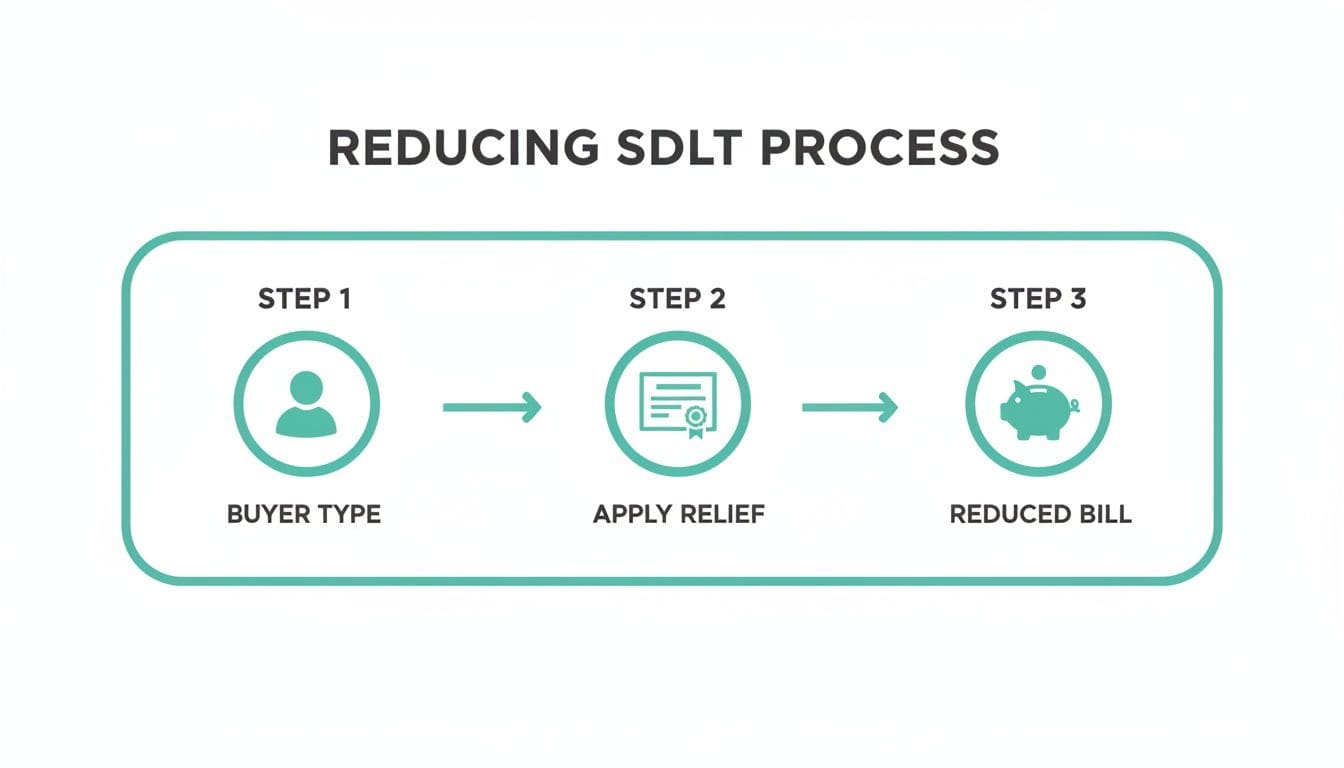
This simple flow chart shows the process: identify your buyer type, apply the right reliefs, and see the final bill come down.
The key takeaway here is that reliefs aren't automatic. You have to meet the criteria and make sure you're applying them correctly in your calculation.
Example 1: The First-Time Buyer
A first-time buyer gets the most generous treatment. For a £450,000 property, they can take full advantage of the current relief thresholds.
- The first £425,000 is taxed at 0%, which is £0.
- The remaining £25,000 (from £425,001 to £450,000) falls into the next band, taxed at 5%. That's £1,250.
The calculation is straightforward, and their total bill is incredibly low.
Total SDLT Payable: £1,250
Example 2: The Standard Home Mover
Next up is the standard home mover. They're selling their main residence to buy a new one, so they don't get any special reliefs, but they don't face any punishing surcharges either.
- The first £250,000 is taxed at 0%, which is £0.
- The next £200,000 (from £250,001 up to the £450,000 price) is taxed at 5%. That's a solid £10,000.
Their bill is a huge jump from the first-time buyer's, which really highlights the value of that initial relief.
Total SDLT Payable: £10,000
Example 3: The UK Investor
Now for a UK-based investor buying an additional property, maybe a buy-to-let. They get hit with the 3% Higher Rate for Additional Dwellings (HRAD) surcharge on top of the standard rates.
This is where the maths gets a bit more involved, because that extra 3% applies right from the first pound.
- The first £250,000 is taxed at 3% (0% standard + 3% surcharge), which comes to £7,500.
- The next £200,000 is taxed at 8% (the usual 5% + the 3% surcharge), which is £16,000.
The total is more than double what the home mover pays. It's a stark reminder of why SDLT is a critical line item in any investment deal. Getting these costs wrong is a disaster when you evaluate HMOs, Serviced Accommodation, and BRRRR deals, as it eats directly into your cash pot and destroys your return figures.
Total SDLT Payable: £23,500
Example 4: The Overseas Investor
Finally, let's look at a non-resident investor buying an additional property. They get hit twice: with the 3% HRAD and the 2% non-resident surcharge, creating a combined 5% surcharge across the board.
- The first £250,000 is taxed at 5% (0% standard + 5% combined surcharge), which is £12,500.
- The next £200,000 is taxed at a painful 10% (5% standard + 5% combined surcharge), which is £20,000.
This scenario produces the highest tax bill by a country mile.
Total SDLT Payable: £32,500
SDLT Calculation Examples at £450,000
Putting these four scenarios side-by-side really drives the point home. The tax on the exact same property can vary by over £30,000 depending on the buyer's circumstances.
| Buyer Profile | Applicable Rates/Reliefs | Total SDLT Payable |
|---|---|---|
| First-Time Buyer | First-Time Buyer Relief | £1,250 |
| Standard Home Mover | Standard Rates | £10,000 |
| UK Investor (Additional Property) | Standard Rates + 3% HRAD Surcharge | £23,500 |
| Overseas Investor (Additional Property) | Standard Rates + 3% HRAD + 2% Non-Resident Surcharge | £32,500 |
These examples make it crystal clear that a one-size-fits-all approach to budgeting for stamp duty just doesn't work. The same property can generate a tax bill ranging from £1,250 to £32,500, making a precise stamp duty land tax calculator an absolutely essential tool for any serious buyer.
Why SDLT Is a Critical Metric for Investors
For any serious property investor, Stamp Duty Land Tax isn't just 'another tax'. It's a huge capital expense that can make or break a deal's numbers. Treating SDLT as a simple completion cost is a rookie mistake; it's a fundamental part of your initial cash outlay, right up there with your deposit and refurb budget.
This upfront cost has a direct, and often brutal, impact on your most important deal metrics. A bigger SDLT bill immediately pumps up the "cash in" part of your analysis, which in turn squeezes your Return on Investment (ROI) and cash-on-cash return. A deal that looks promising on paper can quickly become marginal, or even a non-starter, once the correct tax is factored in.
The Direct Impact on Deal Viability
Every pound you spend on SDLT is a pound you can't put towards a bigger deposit, a higher-spec renovation, or your next investment. It's in direct competition for your capital. An unexpectedly high bill could force you to compromise elsewhere or, in the worst case, pull out of the purchase altogether.
This is exactly why a reliable stamp duty land tax calculator is non-negotiable in the early stages of your due diligence. It gives you the clarity you need to model your numbers properly from day one.
The sheer scale of this tax is worth noting. In the 2022–23 tax year, SDLT receipts hit a peak of around £15.36 billion. Just a year later, in 2023–24, that figure dropped to about £11.61 billion—a fall of roughly 24.4%. This shows just how sensitive the market is to stamp duty policy changes. You can see more on these UK tax receipt trends on Statista.
Automating Accuracy to Avoid Costly Errors
Trying to calculate SDLT manually, especially with all the surcharges, reliefs, and edge cases, is asking for trouble. A simple human error can leave you thousands of pounds short in your budget—a painful discovery to make late in the game. This is where modern property tools become indispensable for serious investors.
Applications like the DealSheet AI app are designed to stop these critical errors before they happen. They automatically factor the correct SDLT into their financial models, giving you a true and instant picture of a deal's potential. This automated approach means your analysis is always based on accurate, up-to-date tax rules, protecting your capital and leading to smarter investment decisions.
This level of precision is essential for success, something we explore in our complete guide to analysing UK buy-to-let deals. By getting the SDLT calculation right from the start, investors can confidently work out if a property's returns truly justify the significant upfront tax bill, turning a potential liability into a calculated business expense.
Common Questions About Stamp Duty Land Tax
Even with the clearest guide, a few practical questions always pop up. Here are quick, straight-talking answers to the most common points of confusion investors run into with Stamp Duty Land Tax.
When Do I Actually Have to Pay Stamp Duty?
The deadline for paying SDLT is non-negotiable: it must land with HMRC within 14 days of the 'effective date' of the deal. In almost every case, that's the day you complete the purchase.
Fortunately, this isn't something you have to manage yourself. Your solicitor or conveyancer handles the entire process. They'll file the necessary SDLT return and make sure the payment is sent on time, using the funds you provide for completion. Missing that 14-day window triggers penalties and interest charges, so it's a deadline your legal team takes very seriously.
Can I Just Add the SDLT Bill to My Mortgage?
This is a frequent question, but the answer is almost always a firm no. You can't just add your SDLT bill to your mortgage loan.
Lenders secure their loans against the property's market value, and they see SDLT for what it is: a separate transaction tax, not part of the property's intrinsic worth. This means you must have the full amount for Stamp Duty available in cash, sitting alongside your deposit, legal fees, and other upfront costs. Factoring this cash requirement into your budget from day one is absolutely critical.
What Happens If I Buy a New Home Before Selling My Old One?
This scenario, often caused by a broken property chain, has major SDLT implications. If you complete on a new main residence before you've sold your previous one, you temporarily own two properties.
Because of this, you'll have to pay the 3% higher rate for additional dwellings on the new purchase.
However, there's a crucial refund rule here. If you sell your previous main residence within 36 months (3 years) of buying the new one, you can apply to HMRC for a full refund of that extra 3% surcharge you paid.
Is Stamp Duty Different in Scotland or Wales?
Yes, completely different. The system we've covered in this guide—Stamp Duty Land Tax (SDLT)—only applies to property deals in England and Northern Ireland.
Scotland and Wales have their own devolved property taxes with entirely different rules, rates, and reliefs.
- In Scotland, you'll pay Land and Buildings Transaction Tax (LBTT).
- In Wales, the tax is called Land Transaction Tax (LTT).
While they all use a similar progressive structure, the specific bands and buyer reliefs vary significantly. Always make sure you're using a calculator designed for the correct country to get an accurate figure. Most online tools, including any standard stamp duty land tax calculator, are built specifically for the SDLT rules in England and NI.
To make sure your investment analysis is always accurate, let DealSheet AI handle the complexities for you. The app automatically calculates the correct SDLT based on your deal structure, giving you a true picture of your upfront costs and returns. Download DealSheet AI from the App Store and start your free trial.