
The Best UK Property Investing Courses For Building Wealth in 2026
The Best UK Property Investing Courses For Building Wealth in 2026
Investing in UK property has huge potential, but turning that potential into profit requires expert knowledge, not just capital. The best property investing courses provide a clear, structured roadmap to success, helping you navigate the complexities of the market and avoid costly mistakes. This guide cuts through the hype to show you exactly how to choose the right UK course for your goals. To immediately apply your learnings and analyse deals with precision, download the DealSheet AI app from the App Store and start your free trial.
Why Property Investing Courses Are Gaining Momentum in 2026

The UK property market can be a powerful engine for building wealth, but trying to navigate it without a clear strategy is a costly gamble. It's why a growing number of new and experienced investors are turning to structured education to get a real edge. A good course isn't just a folder of information; it's a proven framework for making smart, data-driven decisions in the UK market.
This isn't just a feeling, either. The numbers back it up. As total UK property investment volumes are projected to hit over £50 billion in 2025, course enrolments are forecast to climb by over 35% in 2026. That's tens of thousands of people signing up for programmes to master specific UK strategies like HMO and BRRRR, according to market analysis.
The Real Value of a Structured Education
Think of a good property course as a detailed roadmap. Sure, you could try to piece together your route from scattered online articles and podcasts, but a structured curriculum gets you from A to B efficiently. More importantly, it helps you sidestep the common pitfalls that can cost you thousands.
The real goal of a property investing course isn't just to teach you what to do—it's to teach you what not to do. Avoiding just one bad deal can pay for your entire education, several times over.
A quality course gives you a repeatable system for success. It arms you with the core skills needed to operate confidently in the UK market, including:
- Financial Literacy: Getting to grips with essential metrics like Return on Investment (ROI), yield, and cash flow.
- Deal Analysis: Learning how to properly analyse a potential investment to see if the numbers truly stack up.
- Strategic Knowledge: Mastering specific investment models, from standard buy-to-lets to more complex strategies like flipping or serviced accommodation.
- Legal & Tax Compliance: Understanding UK-specific regulations like Stamp Duty Land Tax (SDLT) and the impact of Section 24 on mortgage interest relief.
This foundational knowledge is absolutely critical, especially when you're just starting out. For a deeper dive into the basics, check out our guide on investing in property for beginners. By investing in the right education, you're not just buying information. You're buying confidence, clarity, and a clear path to building a successful and sustainable property portfolio.
Choosing Your Learning Path: Online vs. In-Person
Your first big decision is how you want to learn: from your desk at home or in a room with other investors? This choice between online and in-person property investing courses really shapes the whole experience. There's no single right answer; it all comes down to your schedule, your budget, and how you personally learn best.
Let's break down the real-world differences so you can pick the path that actually fits your life.
Online courses obviously win on flexibility. You can dive into lectures, download resources, and work through practical exercises whenever and wherever it suits you. For anyone trying to squeeze this around a full-time job or family life, they're a game-changer.
On the flip side, nothing quite beats the energy of an in-person workshop. The ability to ask an instructor a question and get an immediate, detailed answer is gold. And the networking opportunities? They're invaluable and much harder to replicate through a screen.
Online Property Courses: A Modern Approach
Digital learning has come a long way from just watching pre-recorded videos. Today's platforms are seriously sophisticated, often packed with interactive tools, ready-to-use templates, and access to buzzing online communities. This setup is perfect if you're self-motivated and like to go at your own pace.
The main benefits of learning online are pretty clear:
- Cost-Effectiveness: With no venue to hire or travel costs to worry about, online courses are almost always more affordable. The lower overheads for the provider mean lower prices for you.
- Accessibility: All the course materials are there for you 24/7. This is a huge plus when you need to revisit a complex topic like UK tax rules or a tricky bit of deal analysis.
- Variety: The online world is vast. You can find hyper-specific courses on anything from introductory buy-to-let strategies to advanced masterclasses on HMO management.
This self-paced style means you can spend extra time on the bits you find tough and fly through the concepts you already get.
In-Person Workshops: Fostering Connections
While online is great for flexibility, you just can't beat face-to-face interaction for building real relationships and getting personal mentorship. Most in-person property investing courses are structured as intense weekend bootcamps or multi-day seminars.
The connections you make at an in-person event can be just as valuable as the curriculum itself. Your future joint venture partner or mentor could be sitting right next to you.
The big advantages of being in the room are:
- Networking: Building a solid professional network is non-negotiable in property. Live events are the best place to connect with peers, seasoned investors, and crucial industry contacts like mortgage brokers and solicitors.
- Direct Mentorship: You get to ask questions and receive instant, nuanced answers from instructors who are actively investing in the current UK market. No waiting for an email response.
- Focused Environment: Being in a dedicated learning space, away from the distractions of daily life, forces you to completely immerse yourself in the material. It's the fast track to making rapid progress.
The Rise of Hybrid Learning
Clever providers have realised that both models have their strengths, which has led to the rise of the hybrid approach. This blended format is the best of both worlds.
It usually combines self-paced online modules with live, interactive sessions like weekly Q&A webinars or even periodic in-person meetups. This gives you the flexibility of digital learning alongside the community and accountability of a traditional classroom, making it a hugely popular choice for busy professionals heading into 2026.
What Every Great Property Course Must Cover
A flashy website and glowing promises don't make a course work; the curriculum does. When you're looking at property investing courses, the syllabus is the only thing that actually matters. It's the blueprint that will either guide you to profitable decisions or leave you with a head full of theory and no practical skills.
Before you invest a single pound in your education, you need to know what to look for. The best courses are built around a core of non-negotiable topics that are essential for operating legally, safely, and profitably in the UK property market. Think of this as your checklist to cut through the marketing fluff and see if a course delivers real-world value.
The Bedrock of Success: Deal Analysis
If you only learn one thing, make it this: deal analysis. This is the art and science of stress-testing an investment's true financial viability. It means looking straight past the estate agent's brochure and running the numbers yourself to see if a deal actually works.
A great course will spend a serious amount of time here. This isn't just about simple yield calculations; it's a deep dive into every potential cost and income stream. Any curriculum worth its salt has to teach you how to:
- Accurately forecast rental income based on solid, local market evidence, not optimistic guesses.
- Factor in all operational costs: This means voids, maintenance, management fees, insurance, and service charges. The small stuff adds up.
- Model different financing scenarios to understand how mortgage rates and LTVs will impact your cash flow.
Without this skill, you are just gambling. Mastering deal analysis turns you from a hopeful speculator into a calculated investor who makes decisions based on data, not emotion.
Navigating UK Tax and Regulations
The UK's property tax landscape is a minefield, and it's constantly changing. A course that just skims the surface here is doing you a massive disservice. Ignorance of tax law isn't just expensive; it can land you in serious trouble with HMRC.
Your chosen course must have specific, up-to-date modules on UK regulations.
Understanding tax isn't just about compliance; it's a strategic tool. The right knowledge lets you structure your portfolio for maximum efficiency, legally minimising your tax bill and boosting your actual returns.
Look for these key topics in the syllabus:
- Stamp Duty Land Tax (SDLT): Detailed breakdowns of how SDLT is calculated for different buyers, including first-timers, portfolio landlords, and non-UK residents.
- Section 24: A proper explanation of how this legislation restricts mortgage interest relief for individual landlords and its huge impact on profit. The course should explore how to mitigate it, such as using a limited company.
- Capital Gains Tax (CGT): Clear guidance on how CGT works when you sell a property and what allowances you can legally use.
Mastering Key Investment Strategies
Finally, a comprehensive course must teach you the practical application of proven investment strategies. A basic buy-to-let is a great start, but the real growth often comes from more advanced techniques. To get a handle on the returns from a standard buy-to-let, you can explore our guide on working out property yield.
Make sure the curriculum provides step-by-step frameworks for popular UK strategies. This should include detailed financial modelling, project management tips, and the legal compliance for each one. Key strategies to look for are:
- Buy-Refurbish-Refinance-Rent (BRRRR): This is a powerful way to recycle your capital and build a portfolio quickly. A good module will cover sourcing the right properties, costing refurbs accurately, and managing the refinance process.
- Houses in Multiple Occupation (HMOs): HMOs can generate fantastic cash flow but come with very strict rules. The course must cover licensing, Article 4 directions, and the specific management headaches of this model.
- Property Auctions: Buying at auction can be a brilliant way to find deals below market value, but it's a high-pressure environment. The course should teach you how to do your due diligence beforehand, understand the legal pack, and bid with confidence.
A course that nails these three pillars—deal analysis, UK tax, and practical strategies—gives you the solid foundation you need to actually succeed.
How To Evaluate A Course And Measure Its ROI
Investing in your education needs the same sharp due diligence as buying a property. Before you sign up for any of the countless property investing courses out there, you need a solid framework for vetting them. A great course is an investment, not an expense, but its value is entirely down to its quality and relevance to the real UK market.
So, how do you sort the genuine experts from the slick marketers? It starts by looking past the sales page and digging into the three things that really matter: the instructor's credibility, verifiable student results, and the support you get after the course ends.
Investigate The Instructor
First things first: vet the person teaching the course. You need someone who is an active, experienced UK property investor, not a theorist who built a portfolio a decade ago and has been selling courses ever since. The UK market is constantly shifting, and you need guidance from someone who is in the trenches today, navigating the same challenges you will be.
Look for proof they are still doing deals. A credible instructor will be open about their current projects and strategies. Check them out on LinkedIn or their company website. Are they a genuine property professional, or just a professional course seller? There's a big difference.
Look For Authentic Results
Next, you need to see proof that the course actually works for its students. Vague testimonials like "it was a great course" are worthless. You're looking for specific, verifiable success stories and detailed case studies that show real outcomes.
- Authentic Testimonials: Look for video testimonials or detailed reviews that mention specifics, like the number of deals completed, the ROI they achieved, or how they overcame a particular challenge using what they learned.
- Real Case Studies: The best courses proudly showcase student deals, complete with the numbers. They'll break down the purchase price, the refurb costs, the final valuation, and the profit or cash flow that resulted.
A course's true value is measured by the success of its students. If a provider isn't proudly and transparently showcasing their students' wins, you have to ask why.
Assess The Post-Course Support
Property investing can be a lonely game, and the learning doesn't stop when the last video finishes. The very best property investing courses provide robust support to make sure you actually apply what you've learned. This ongoing help is often what separates a good course from a great one.
Here's what to look for:
- An active online community (like a private Facebook or Slack group) where you can ask questions and connect with other investors.
- Regular live Q&A sessions with the instructors or expert mentors.
- Ongoing access to the course material, including any future updates.
Measuring Your Return On Investment
The impact of quality UK property investing courses isn't just anecdotal; there's clear data backing it up. A recent industry survey showed that over 70% of course graduates reported making better investment decisions due to mastering skills like deal analysis and understanding UK tax rules. Furthermore, investors who complete structured training often see a significantly higher deal success rate compared to untrained peers, particularly when targeting specific high-growth areas.
Ultimately, your ROI is about more than just money. A great course gives you the confidence to take decisive action and the skills to avoid ruinously expensive mistakes. To get a handle on the financial return of a potential deal, you can use our detailed guide on the UK property ROI calculator. By investing in the right education, you're not just buying information; you're buying a repeatable system for building wealth safely and efficiently.
Turn Your Knowledge Into Data-Driven Decisions
Finishing one of the UK's best property investing courses is a massive milestone. But here's the blunt truth: theory is only half the battle. Real wealth isn't built in the classroom; it's built when you turn that knowledge into fast, confident action on actual deals. This is where the gap between learning and earning finally closes.
The trick is to apply what you've learned immediately. To do that, you need a way to analyse properties without getting bogged down in manual spreadsheets, especially when the market moves so quickly. This is precisely why we built the DealSheet AI app—to act as your digital co-pilot, turning the complex models you learned about into instant, actionable insights.
From URL to Full Analysis in Seconds
Imagine you spot a promising property on Rightmove or Zoopla. Instead of spending the next hour wrestling with a spreadsheet, you just paste the listing's URL into DealSheet AI. Within seconds, the app grabs the key data—price, bedrooms, location—and runs a complete financial analysis based on the strategy you choose.
This is the power of putting your education into practice without the drag of manual calculations. The app becomes your single source of truth, ensuring every decision is based on the same solid, reliable numbers.
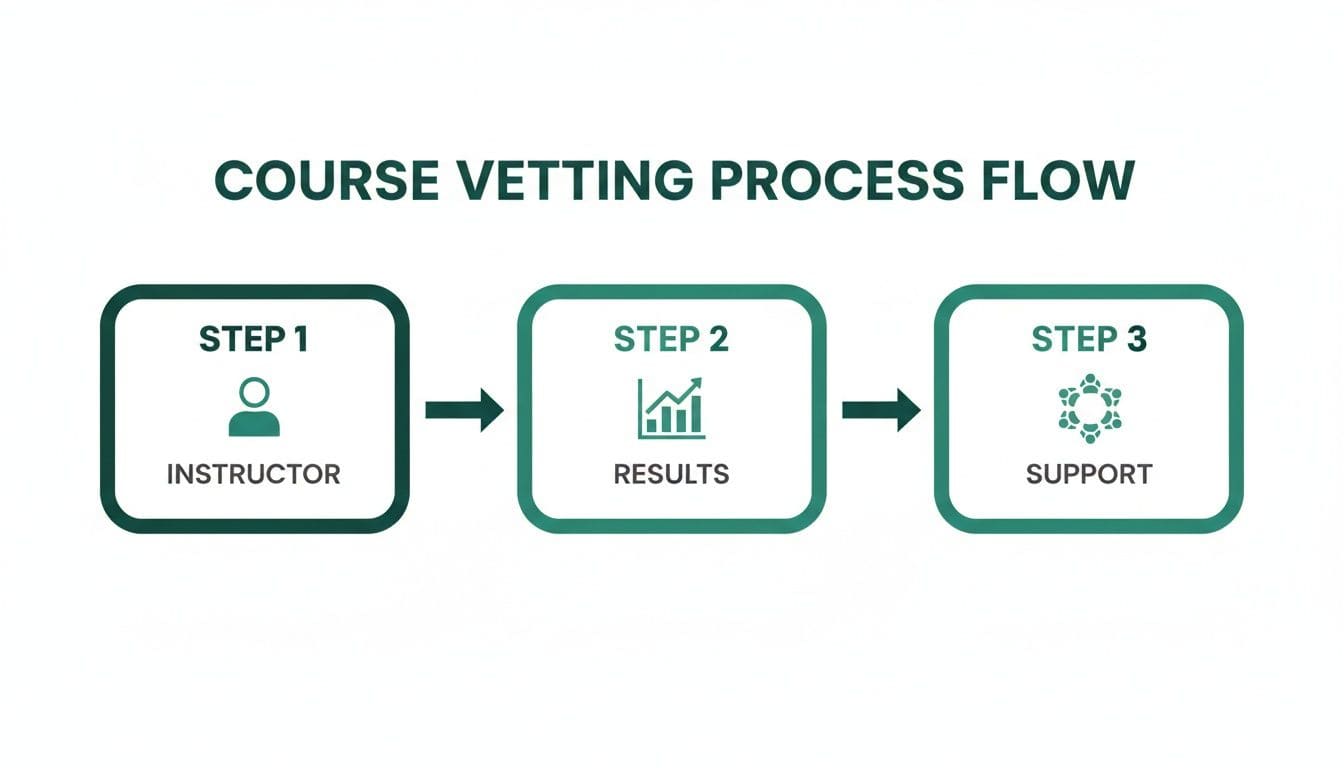
Before you invest in any training, it's worth having a framework to vet it. The simple flow below shows the three pillars of any good course: the quality of the instructor, the real-world results of their students, and the support you get along the way.

Think of these three pillars—Instructor, Results, and Support—as your non-negotiables. If a course is weak on any of them, your investment in your education might not deliver the returns you expect.
Applying Complex Models Instantly
Your course probably threw a lot of theory at you for strategies like BRRRR, HMOs, or Flips. DealSheet AI comes with built-in templates for each one, pre-loaded with the right formulas and UK-specific costs. This means you can apply what you've just learned instantly, without the risk of a tiny spreadsheet error costing you thousands.
- For BRRRR: You can immediately model the refurb costs, calculate the expected uplift in value, and see the final refinanced cash flow. No guesswork.
- For HMOs: The app helps you factor in individual room rates, the higher running costs, and specific licensing fees to reveal the true net profit.
- For Flips: It accurately calculates your all-in costs—acquisition, stamp duty, renovation, and selling fees—to project your final margin before you even view the property.
This kind of practical application builds real confidence, fast. You're not just trying to remember what the instructor said; you're actively using it to evaluate live opportunities.
Stress-Testing Your Portfolio
One of the most valuable skills taught in any advanced property investing course is how to stress-test a portfolio. What happens to your cash flow if interest rates jump by 2%? What if you hit a rough patch and void periods rise by 10%?
With DealSheet AI, you can run these scenarios across your entire portfolio with a few taps. It turns a complex, theoretical exercise into a simple, practical risk assessment. The app also creates professional, one-page PDF reports that you can send straight to mortgage brokers or joint venture partners, proving you've done your homework.
Common Questions About Property Investing Courses
Let's be honest, navigating the world of property education throws up a lot of questions. To help you cut through the noise and make a decision that feels right for you, here are some straight answers to the questions we hear most often.
Are Property Investing Courses Worth The Money In The UK?
Yes, a high-quality course is one of the most powerful investments you can make in your property journey. It's not just about learning; it's about accelerating your progress. A good course can shave years off your learning curve, help you sidestep eye-wateringly expensive mistakes, and hand you a proven framework for analysing deals and navigating the maze of UK tax laws like SDLT and Section 24.
Think of it this way: the return on your investment often comes from making just one better deal, or, more importantly, avoiding one disastrous one. That single decision can easily pay for the course many times over, making it a seriously smart move for any aspiring investor.
How Much Should I Expect To Pay For A UK Property Course?
The price tag can vary wildly, and it really depends on the depth of the content and the format. As a rough guide for 2026, here's what you might expect:
- Introductory Online Courses: These typically range from £200 to £500. They're great for getting the foundational knowledge you need, with the flexibility to learn on your own schedule.
- Comprehensive Workshops: For multi-day seminars or intensive bootcamps, you're looking at £1,500 to £5,000. These offer a much deeper dive and brilliant networking opportunities.
- High-Touch Mentorships: Elite, long-term programmes that give you direct one-on-one access to seasoned investors can cost £10,000 or more.
The key is to match the price to what you're actually getting. Always check the curriculum's depth and the level of direct support and community you'll receive.
Can I Succeed In Property Without Paying For A Course?
Absolutely. Plenty of successful investors are entirely self-taught, piecing together their knowledge from books, podcasts, and free networking events. It's definitely possible.
However, that path demands an incredible amount of discipline and a huge investment of your time to connect all the dots. A structured course offers an accelerated, guided path. And just as importantly, it often includes an invaluable community of peers and mentors, something that's much, much harder to build from scratch on your own.
What Is The Most Critical Skill A Property Course Should Teach?
If you take only one thing away, let it be this: the single most critical skill is unemotional deal analysis. It's the rock-solid ability to calculate a property's true profitability by factoring in all the costs, the financing, and the potential income—not just the glossy headline figures. You can get a head start by reading our guide on how to calculate what a good ROI on rental property is.
Without solid deal analysis skills, even the best strategy is just a gamble. It's the foundation upon which every successful property portfolio is built.
This is the one skill that separates the pros from the amateurs. Modern tools are now designed specifically to help you master and speed up this vital process, ensuring every investment decision you make is backed by cold, hard data.
Ready to put your knowledge into action? DealSheet AI helps you analyse deals in seconds, turning complex theory into confident, data-driven decisions. Download the app and start your free trial today to analyse properties like a pro.