
A Landlord's Guide to the UK Tenancy Agreement Template in 2026
A Landlord's Guide to the UK Tenancy Agreement Template in 2026
A solid tenancy agreement is the absolute bedrock of any successful rental in the UK. This guide provides the answer: a comprehensive, legally compliant tenancy agreement template designed for UK landlords, breaking down every critical clause you need to protect your investment in 2026. Get it right, and you've built a powerful layer of protection; get it wrong, and you're exposed. For expert-level deal analysis before you even think about contracts, the DealSheet AI app is invaluable, allowing you to crunch the numbers on any buy-to-let, HMO, or BRRRR deal in seconds.
Understanding the Types of UK Tenancy Agreements

Before you use any template, you've got to know what you're dealing with. Choosing the right type of tenancy isn't just a box-ticking exercise; it fundamentally shapes the relationship with your tenant, your rights, and how you manage your property from day one. Each type offers different levels of flexibility and security for both of you.
Historically, the go-to contract for most private landlords has been the Assured Shorthold Tenancy (AST). In England and Wales, it's pretty much the default if the annual rent is under £100,000, the property is the tenant's main home, and you don't live there. It can be set for a fixed term or just roll on a periodic basis.
The Shift in Tenancy Preferences
But the UK rental market doesn't stand still. Recent data from a huge survey of 485,852 UK tenants, running over the 12 months to 14 April 2025, shows a clear swing in preferences among both landlords and renters. Stability is now the name of the game.
The numbers reveal a striking 56% of tenants are now on fixed-term tenancy agreements. Everyone, it seems, wants more predictability. You can explore more of these rental market trends directly from the Office for National Statistics.
This shift also highlights how landlords are diversifying their strategies:
- Company Lets: A huge 36% of agreements now fall into this category. This is a clear sign that portfolio landlords are moving into the corporate housing space, which demands a completely different type of contract to a standard residential let.
- Periodic Tenancies: These rolling month-to-month contracts are lagging far behind at just 7%. They're mostly used as a continuation after an initial fixed term has ended.
- Traditional ASTs: In a sign of major market recalibration, these have dwindled to a mere 1% in this particular dataset.
To help you get a clearer picture of the landscape, here's a quick rundown of the most common tenancy types you'll encounter.
Common UK Tenancy Agreement Types at a Glance
| Agreement Type | Typical Use Case | Key Feature | Prevalence (2025 Data) |
|---|---|---|---|
| Assured Shorthold Tenancy (AST) | The default for most private residential lets in England & Wales. | Clear fixed term (e.g., 12 months) followed by a periodic tenancy. | 1% (as per specific survey) |
| Fixed-Term Tenancy | Landlords and tenants seeking stability for a set period. | A defined start and end date, offering security for both parties. | 56% |
| Periodic Tenancy | Occurs after a fixed term expires, offering flexibility. | Rolls on a month-to-month basis with shorter notice periods. | 7% |
| Company Let | Renting a property to a company, not an individual. | Not governed by the same rules as ASTs; offers different terms. | 36% |
| Non-Assured Tenancy | High-rent properties (>£100k/year) or if the landlord lives in the property. | Sits outside standard AST protections; less common. | N/A |
As you can see, the choice you make at the start has real consequences.
Choosing the right agreement isn't just a legal formality; it's a strategic decision that impacts your cash flow, tenant retention, and overall risk management. Aligning your tenancy agreement template with your investment goals is the first step towards building a resilient and profitable property business.
Getting these distinctions right is absolutely crucial. As you start to scale your portfolio, adopting a more strategic mindset becomes even more important, which you can read about in our guide on portfolio-level thinking for landlords. Your choice of agreement has a knock-on effect on everything, from how you serve notice to how you handle renewals, making it a foundational decision for your investment journey.
Deconstructing a Watertight Tenancy Agreement
Your tenancy agreement isn't just another bit of admin; it's the legal backbone of your rental. A properly watertight tenancy agreement template is built from a handful of critical parts, each one designed to kill ambiguity and head off disputes before they can even start. Getting these details nailed down from day one defines the rights and responsibilities for both you and your tenant, creating a contract that genuinely protects your asset.
Every clause is there for a reason, from spelling out who's involved to detailing the financial nuts and bolts. These specifics also directly feed into the accuracy of any cash flow and return on investment (ROI) calculations you run. If you're using analytical tools like DealSheet AI, making sure your agreement reflects the real-world deal is essential for making sound decisions.
Identifying the Parties and the Property
First up, you need to state the obvious with legal precision. That means listing the full legal names and current addresses of everyone involved—you (or your letting agent) and every adult tenant who will be living in the property. Any fuzziness here can create serious headaches down the line if you ever need to enforce the contract.
Just as important is a crystal-clear description of the property itself. Go beyond the street address. Be specific about the exact areas the tenant has exclusive use of (e.g., "the flat known as 2B, including the balcony") and any shared areas they can access, like a garden, hallway, or parking space. This simple step prevents a world of pain over boundary disputes or usage rights later on.
Defining the Tenancy Term and Rent Schedule
This is where you set the core expectations for how long the tenancy lasts and how much it costs. You must clearly state the tenancy term, specifying the exact start and end dates for a fixed-term let. For example, "a term of 12 months commencing on 1st September 2026 and ending on 31st August 2027."
You also need to outline what happens when that fixed term ends. The agreement can specify that the tenancy will automatically become a statutory periodic tenancy (rolling month-to-month) unless you both agree to a new fixed term. This gives the tenant security while keeping things flexible.
The rent schedule is the financial heart of the agreement. Leave zero room for interpretation by stating:
- The exact rent amount: For instance, "£1,250 per calendar month."
- The payment date: Specify the day rent is due, such as "on the 1st day of each month."
- The payment method: Detail how rent must be paid (e.g., by standing order to a specified UK bank account).
A vague payment clause is practically an invitation for late payments. Be explicit about due dates, methods, and any consequences for arrears as permitted by law. It's the only way to maintain healthy cash flow.
The UK's economic climate directly affects these clauses. UK private rental price inflation has been a huge factor, hitting 6.2% in the 12 months to January 2024 before being projected to ease to 4.0% by December 2025. This pressure means landlords must ensure their tenancy agreement template includes robust and compliant rent review clauses. You can explore the official data on private housing rental prices from the ONS.
Detailing the Deposit and Prescribed Information
Handling the tenancy deposit correctly isn't just good practice; it's a serious legal duty in the UK. Your agreement must clearly state the deposit amount, which is capped at five weeks' rent for properties with an annual rent below £50,000.
Crucially, the agreement must also contain the prescribed information about the deposit protection scheme you're using. This means naming the government-approved scheme (like the Tenancy Deposit Scheme, Deposit Protection Service, or mydeposits) and providing details on how the deposit is protected and the process for its return.
Fail to provide this information within 30 days of receiving the deposit, and you could face hefty financial penalties. It can also torpedo your ability to repossess the property using a Section 21 notice. For those managing more complex setups like rent-to-rent, a bulletproof contract is even more vital. You can learn more in our guide on the essentials of a rent to rent contract in the UK.
Navigating Your Landlord Compliance Checklist
Getting a solid tenancy agreement template is a great start, but let's be clear: it's just one piece of a much bigger compliance puzzle. For any UK landlord, staying on the right side of the law isn't optional. Getting it wrong can lead to eye-watering financial penalties and, crucially, make it impossible to regain possession of your property when you need to.
Think of this checklist as your essential pre-flight inspection before a tenancy begins. Miss a single step, and you could ground your entire investment.
The rental market in England has exploded, growing by 36% from 6.3 million homes in 1990 to 8.6 million in 2023. This boom, which included a 24.4% jump by 2010-11 and another 12% rise by 2020-21, has brought with it a much tougher regulatory environment. With around 20% of these rentals being older pre-1919 properties—often prime targets for HMOs or BRRRR projects—being meticulous about compliance is how you manage risk and protect your returns. You can dig into these trends and more UK rental market statistics from Alan Boswell.
At its heart, any tenancy agreement is built on three core pillars, which form the foundation of your compliance process.
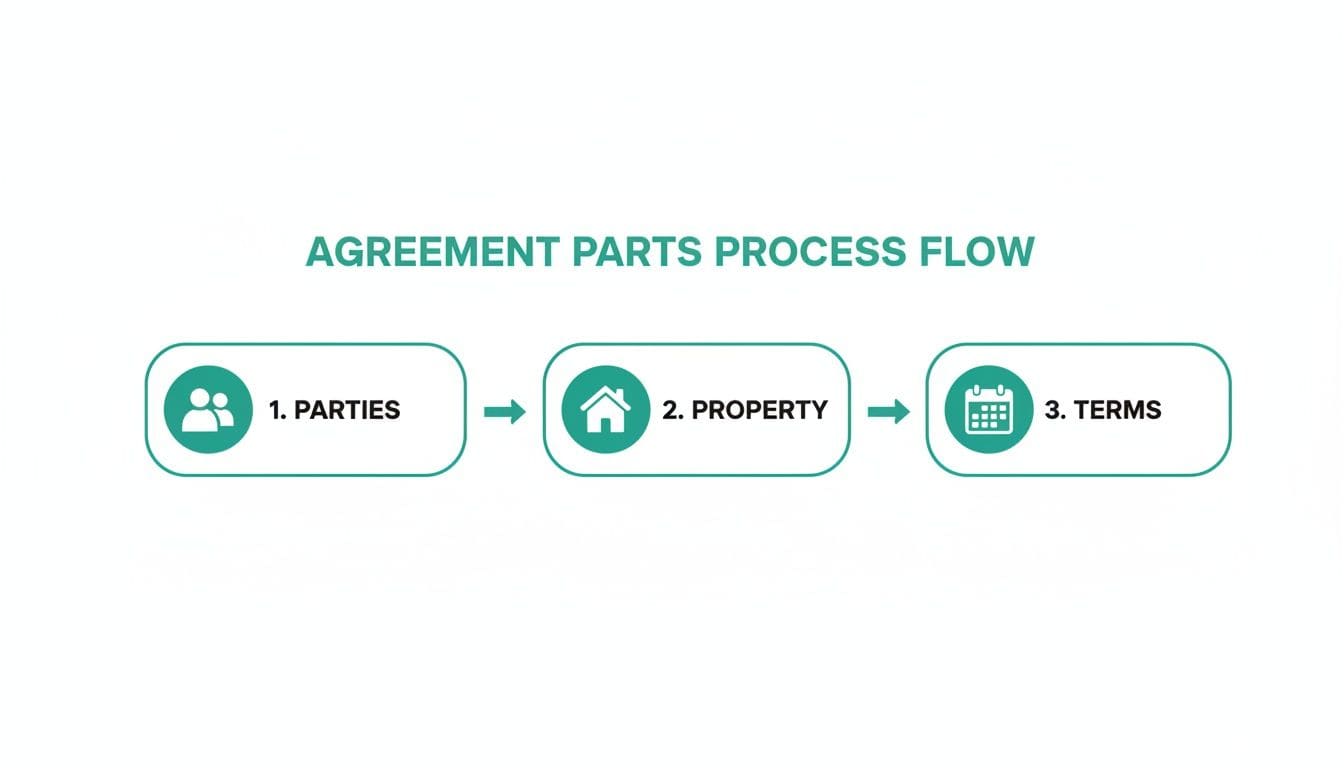
As the diagram shows, absolute clarity on who the agreement is between, what property it covers, and the specific terms is the bedrock upon which all your other legal duties are built.
Before your tenant gets their hands on the keys, there's a pile of paperwork you're legally required to hand over. This isn't just a friendly welcome pack; it's a set of legal obligations you must fulfil. Getting this wrong can invalidate a Section 21 eviction notice down the line, leaving you stuck with a problem tenant. The table below breaks down the must-haves.
UK Landlord Compliance Checklist
| Compliance Item | When to Provide | Legal Requirement | Potential Penalty for Non-Compliance |
|---|---|---|---|
| Gas Safety Certificate (CP12) | Before the tenant moves in and annually thereafter. | The Gas Safety (Installation and Use) Regulations 1998. | Unlimited fines, imprisonment, and invalidated Section 21 notices. |
| Energy Performance Certificate (EPC) | At the start of the tenancy. | The Energy Performance of Buildings (England and Wales) Regulations 2012. | Fines up to £5,000 and inability to let the property. |
| 'How to Rent' Guide | At the beginning of a new tenancy. | The Deregulation Act 2015. | Inability to serve a valid Section 21 notice. |
| Deposit Protection | Within 30 days of receiving the deposit. | The Housing Act 2004. | Fines of 1-3x the deposit amount and invalidated Section 21 notices. |
| Right to Rent Check | Before the tenancy agreement is signed. | The Immigration Act 2014. | Unlimited fines and potential imprisonment. |
| EICR Electrical Report | Before the tenancy begins and at least every five years. | The Electrical Safety Standards in the Private Rented Sector (England) Regulations 2020. | Fines up to £30,000. |
| Smoke & CO Alarms | Test alarms on the first day of the tenancy. | The Smoke and Carbon Monoxide Alarm (England) Regulations 2015. | Fines up to £5,000. |
Making sure every box on this checklist is ticked isn't just about avoiding fines; it's about running a professional, sustainable, and profitable property business.
Right to Rent Checks Explained
Under the Immigration Act 2014, landlords in England have a legal duty to check that all adult tenants have the right to rent in the UK. This isn't a suggestion; it's a hard requirement. You must perform this check for every single tenant aged 18 or over, even if their name isn't on the tenancy agreement itself.
You'll need to check their original documents with the tenant physically present, or you can use the Home Office's online checking service for those with a share code. Crucially, you must keep copies of the documents and record the date you performed the check.
Performing Right to Rent checks is not optional. The penalties are severe, ranging from unlimited fines to imprisonment. It's a critical step to protect yourself and ensure your tenancy is legally sound from day one.
Remember, these checks must be done in a fair and non-discriminatory way. You must check all prospective tenants, not just those you think might not be British citizens, to avoid falling foul of equality laws.
Safety Alarms and Electrical Reports
Your legal duties go far beyond paperwork; they extend to the physical safety of the property. In recent years, the rules around alarms and electrical systems have become much stricter.
First up, alarms. You must ensure there is at least one smoke alarm on every storey of the property that has a room used as living accommodation. A carbon monoxide alarm is also mandatory in any room with a solid fuel-burning appliance, like a wood-burning stove. You are responsible for making sure these alarms are working perfectly on the day the tenancy starts.
Secondly, for all tenancies in England, you must provide a valid Electrical Installation Condition Report (EICR). This report, which can only be done by a qualified electrician, assesses the safety of the electrics and must be renewed at least every five years. A copy must be given to the tenant before they move in. If the report flags any remedial work, you're legally obliged to get it sorted within 28 days.
Staying on top of these tasks is a fundamental part of being a landlord, and it's where having robust systems is an absolute lifesaver. For more tips on systematising your operations, check out our guide on how to manage a property portfolio effectively.
Tailoring Your Agreement for Different Strategies
A generic tenancy agreement template you've downloaded off the internet just won't cut it in the real world of UK property investment. Your legal paperwork needs to be as specific as your strategy. The contract you use for a standard family buy-to-let is worlds away from what you need for a House in Multiple Occupation (HMO), and both are completely different from a corporate let. If you fail to adapt your agreement, you're leaving yourself exposed to some serious risks.
Think of your template as the basic chassis of a car. You still need to fit the right engine and features for the type of driving you'll be doing. Since modern property analysis tools like DealSheet AI let you evaluate all these different strategies side-by-side, it's vital your legal agreements are just as versatile.
Adapting for Houses in Multiple Occupation (HMOs)
Managing an HMO is a fundamentally different game to a single let. You aren't just renting out a property; you're managing a shared living space. This introduces a unique set of potential conflicts and responsibilities, and your tenancy agreement absolutely has to reflect that reality.
Key additions for any HMO agreement should include:
- Communal Area Rules: Be painfully explicit about cleaning rotas and responsibilities for shared spaces like the kitchen, living room, and bathrooms. Spell out the rules on personal belongings being left in these areas.
- Guest Policies: Outline crystal-clear rules for overnight guests, including frequency and duration. This is your first line of defence against unauthorised occupants and overcrowding.
- Noise and Anti-Social Behaviour: A robust clause defining acceptable noise levels and prohibiting anti-social behaviour is critical for keeping the peace between tenants who are strangers to each other.
- Specific Responsibilities: Clarify who is responsible for day-to-day tasks like taking out the bins or reporting maintenance issues in shared areas.
Example HMO Clause Wording "The Tenant agrees to cooperate with other occupants in maintaining the cleanliness and tidiness of all Shared Areas, including the kitchen, bathrooms, and hallways. The Tenant must not leave personal possessions in the Shared Areas in a manner that obstructs or inconveniences other occupants."
Without these specific clauses, you have very little legal ground to stand on when you have to resolve the inevitable disputes that pop up in shared living. For a deeper look into the numbers behind these strategies, our guide on analysing HMOs, Serviced Accommodation, and BRRRR deals provides some valuable context.
The Nuances of Company Lets
When your tenant is a business rather than an individual, you are not creating an Assured Shorthold Tenancy (AST). This is a company let, and it falls outside the scope of much of the Housing Act 1988. This gives you a lot more flexibility, but it also means you need a completely different type of agreement.
A company let agreement must clearly state:
- The Tenant: The tenant is the company itself, not the employee who will be living there. The agreement must be signed by a director or another authorised signatory of the business.
- The Occupant: You should include a clause specifying that the property is to be occupied only by a named employee (or type of employee) of the company.
- Liability: The company is on the hook for the rent and any damages, not the person actually living in the property.
Crucially, the deposit protection rules and the Section 21/Section 8 notice procedures that apply to ASTs do not apply to company lets. This means your agreement must contain its own specific clauses for ending the tenancy and handling the deposit.
Crafting Fair Pet Clauses and Effective Break Clauses
Beyond the big strategies, you'll often need to add optional clauses to your tenancy agreement template. Two of the most common are pet clauses and break clauses.
A pet clause should never be a simple 'yes' or 'no'. A well-drafted clause will grant permission for a specific, named pet and clearly outline the tenant's responsibilities. This should include being liable for any damage caused by the pet and ensuring it doesn't cause a nuisance to neighbours. Many landlords now include a requirement for the tenant to have the property professionally cleaned and treated for fleas at the end of the tenancy.
A break clause offers flexibility for both you and the tenant. It allows either party to end a fixed-term tenancy early, usually after an initial period (for example, six months into a 12-month term). The clause must be worded carefully to be enforceable. It needs to specify the exact notice period required (e.g., two months' written notice) and state that the notice cannot expire before that initial protected period is over. This gives you a way to regain possession if your circumstances change, without having to wait for the full term to end.
Managing the Tenancy Lifecycle from Start to Finish

A signed tenancy agreement isn't the finish line; it's the starting gun. From that moment on, your focus has to shift from finding a tenant to actively managing the tenancy's entire lifecycle. This whole process, from signing and renewals right through to the eventual termination, is where professional landlords protect their cash flow and dodge those costly void periods that can sink an investment.
Getting the agreement signed is the first hurdle. While plenty of landlords still do this in person, the sheer efficiency of e-signatures is hard to argue with. Digital platforms offer a secure, time-stamped, and legally recognised way to finalise your tenancy agreement template without logistical nightmares. It's a game-changer if you're managing properties remotely or have tenants moving from another city.
Handling Tenancy Renewals and Changes
As you get closer to the end of the initial fixed term, you have a crucial decision to make. Do you offer a new fixed-term contract, or just let the tenancy roll over into a periodic one? Each path has different consequences for both you and your tenant.
Offering a new fixed-term agreement gives everyone a bit of security. You lock in a tenant and a guaranteed income stream for another set period, usually 6 or 12 months. This is often the best route if you have a great tenant you want to keep and you value the stability of a longer commitment.
On the other hand, if neither of you signs a new agreement, the tenancy automatically becomes a statutory periodic tenancy. It simply rolls from month to month on the exact same terms as the original contract. This offers a lot more flexibility; the tenant can leave by giving one month's notice, and you can regain possession more quickly if you need to (as long as you serve the correct notice).
This is also the natural point to think about a rent increase. If you're renewing for a fixed term, the new rent should be agreed upon and stated clearly in the new agreement. For a periodic tenancy, you either need the tenant's written agreement to the new rent or you must formally serve a Section 13 notice, giving at least one month's notice of the increase.
A well-managed renewal process is key to tenant retention. Proactively communicating your intentions about 60-90 days before the fixed term ends shows professionalism and gives everyone ample time to plan, reducing the risk of an unexpected vacancy.
Navigating the End of a Tenancy
Even the best tenancies come to an end eventually. How you manage this final phase is governed by strict legal procedures. In England, there are two main ways for a landlord to regain possession of their property under an Assured Shorthold Tenancy (AST).
The most common method is using a Section 21 notice. This is often called the 'no-fault' route, as you don't need to give a reason for ending the tenancy. But there's a huge catch: you can only serve a valid Section 21 notice if you've fulfilled all your initial compliance duties, like protecting the deposit and providing all the required documents at the start.
The second method is a Section 8 notice. This is used when the tenant has breached the terms of the tenancy agreement template, with the most common reason being significant rent arrears. Serving a Section 8 notice means you have to state the specific grounds on which you're seeking possession, and it can often lead to a court hearing if the tenant decides to dispute your claim.
The Checkout and Deposit Deduction Process
Once the tenant has moved out, the final step is the checkout. This involves doing a thorough inspection of the property and comparing its condition against the detailed inventory report that was signed right at the start of the tenancy.
This comparison is your evidence for making any necessary deductions from the tenant's deposit. You can't just deduct for anything you feel like; deductions can only be made for specific issues, such as:
- Damage beyond fair wear and tear: Think a broken window or a badly stained carpet, not minor scuffs on a wall from everyday living.
- Cleaning: If the property isn't returned in the same state of cleanliness it was at the start, you can deduct the cost of a professional clean.
- Unpaid rent or bills: Any outstanding financial obligations can be claimed from the deposit.
You have to communicate any proposed deductions to the tenant in writing, backing them up with evidence like invoices or photos. If a dispute arises that you can't resolve directly, the government-backed deposit protection scheme will offer a free dispute resolution service to adjudicate the claim fairly. Getting this process right ensures a smooth transition to finding your next tenant.
Common Questions About Tenancy Agreements
Navigating the world of property letting throws up plenty of questions, especially around the legal paperwork. Even with the best tenancy agreement template in hand, landlords often bump into specific scenarios that require a clear understanding of UK law. Let's tackle some of the most common queries to give you a bit more clarity and confidence.
One of the first things new landlords ask is whether they can just knock up their own agreement from scratch. While you technically can, it's an incredibly risky path to take unless you happen to be a qualified expert in UK housing law. The potential pitfalls are huge, from accidentally including unenforceable clauses to writing something that makes it impossible to repossess your property down the line. A professionally drafted, regularly updated template is always the safest bet.
Can I Write My Own Tenancy Agreement in the UK?
Honestly, it's a terrible idea. The legal landscape for landlords is a minefield of complex, ever-changing rules. A poorly drafted agreement can be easily challenged in court, leaving you wide open to disputes and serious financial loss. Using a solid tenancy agreement template from the get-go ensures you're compliant with current legislation, protecting both you and your tenant.
Another point of confusion that often trips people up is the difference between a tenancy and a licence. They might sound similar, but in the eyes of the law, they're worlds apart.
A tenancy grants a tenant exclusive possession of a property. This is a powerful right, meaning they can exclude everyone—including you, the landlord—except for agreed-upon access for inspections or repairs. A licence, on the other hand, is just permission to use a space, like a lodger has in your home. It doesn't grant exclusive possession, and tenants have far, far greater legal protections under UK law.
How Should I Handle Rent Increases Correctly?
Managing rent increases needs a careful touch to stay on the right side of the law. During a fixed-term tenancy, you can only increase the rent if the tenant agrees to it or if your tenancy agreement contains a specific rent review clause that clearly lays out the process.
For periodic (rolling) tenancies, you have two main options:
- Come to a new written agreement with your tenant on the new rental amount.
- Serve a formal Section 13 notice, giving at least one month's notice of the proposed increase.
Any increase must be fair and realistic, in line with what similar local properties are going for. An unreasonable hike is just asking to be challenged. Understanding your property's financial performance is crucial here; for more on this, check out our insights on using a rent yield calculator in the UK.
What if a Tenant Wants to Leave a Fixed-Term Tenancy Early?
A tenant is legally on the hook to pay rent for the entire fixed term they signed up for. But life happens. If your tenancy agreement template includes a break clause, either you or the tenant can end the agreement early by giving the specified notice (e.g., two months) after a certain period has passed.
If there's no break clause, a tenant can only leave early if you agree to it, which is known as a 'surrender' of the tenancy. If you do agree and then need to find a replacement, you may be able to charge the outgoing tenant for the reasonable, demonstrable costs of re-letting the property.
Managing tenancy agreements demands attention to detail, but having the right tools makes all the difference. When you're ready to move beyond the paperwork and start analysing your next property deal with speed and precision, DealSheet AI is the app you need. It turns property listings into actionable investment analyses in seconds. Download DealSheet AI from the App Store and start your free trial today.